
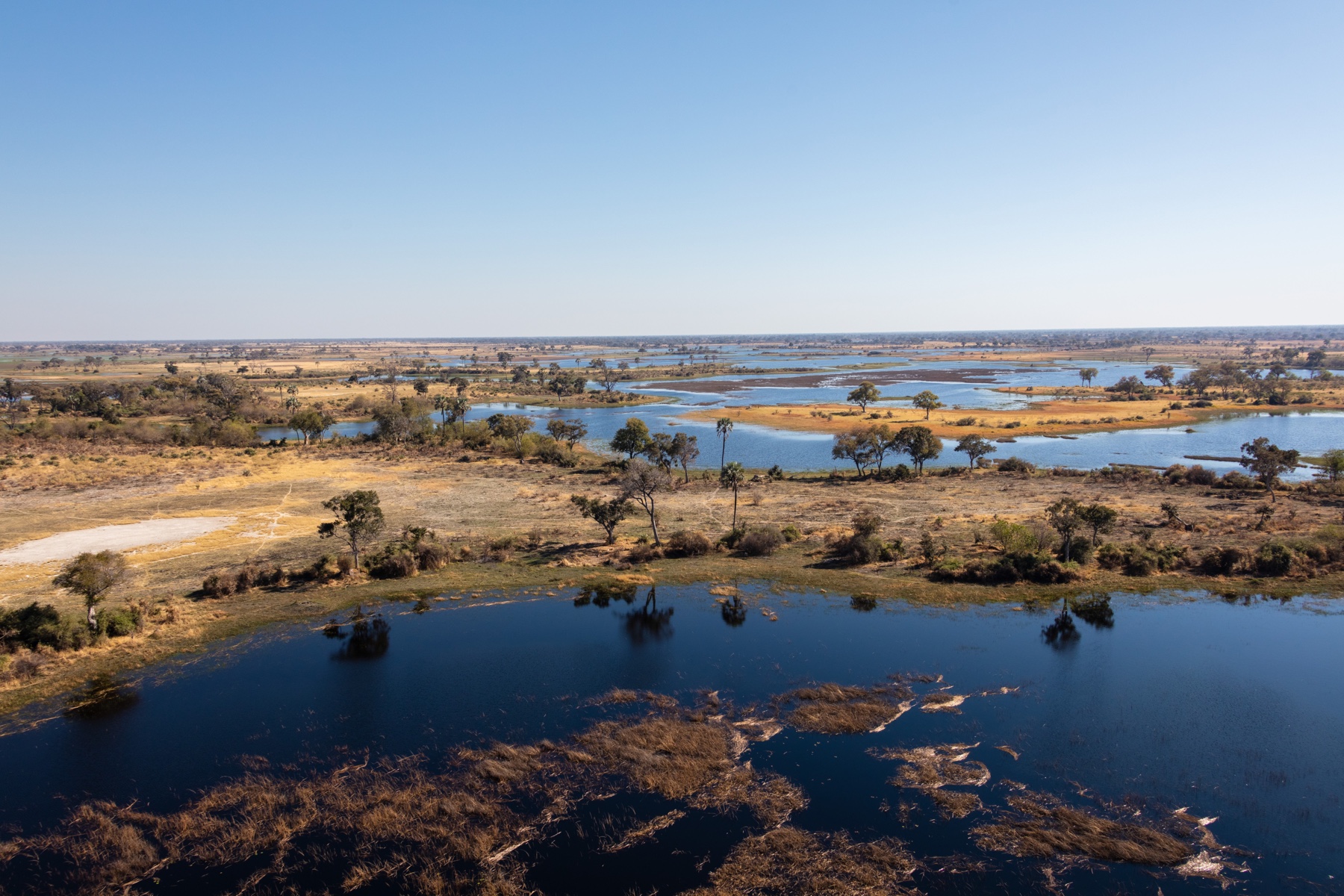
Okavango at High Water
6 nights from Maun into the Okavango Delta during the June–July high water.
- Fly into
- Maun · MUB
- Shortest trip
- 6 nights
- Ideal stay
- 8-10 nights
- Best time
- Every year, June–July
Why go
The Okavango is a vast inland delta where seasonal floodwater meets permanent swamp, floodplain and dry grassland. From Maun, a light aircraft flies you out over it all. You'll spend 4 nights at one remote camp, with time for patient guided trips and to learn about the water, conservation and local communities.
- Where
- Ngamiland, Botswana
- Language
- English · Setswana
- Currency
- BWP
- Time zone
- Central Africa Time
- Best time
- Every year, June–July
- Typical conditions
- June and July are dry-season months, with cool mornings and warm days. Water levels, channels, fires and activities vary a lot by area.
Plan for 8-10 nights. That allows buffers in Maun at both ends and several relaxed days at camp, in case weather or water levels change plans.
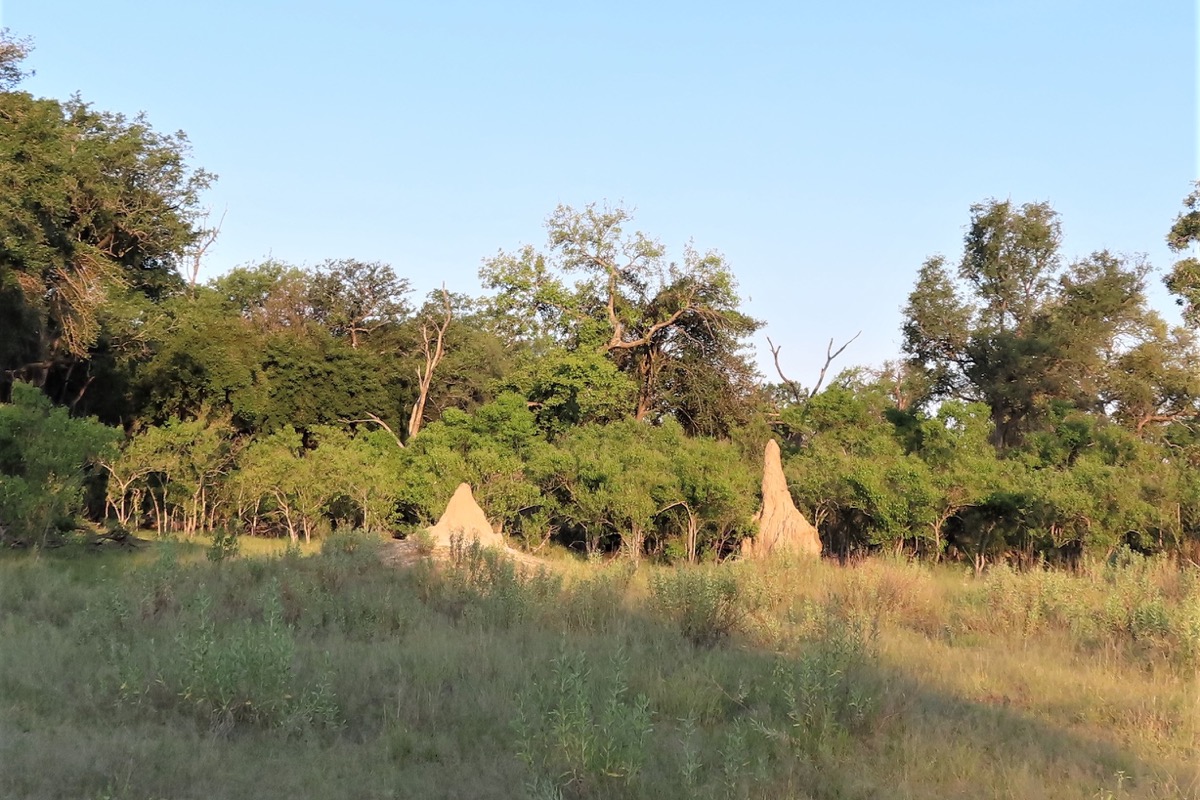 The place
Termite mounds rise through woodland in the Okavango Delta.
The route
Follow the stops in order.
For orientation only. Use a map app for directions.
- 01Maun International Airport
- 02Maun arrival and exit base
- 03Vumbura Airstrip
- 04Little Vumbura
Highlights
- 01
Maun arrival and exit base
Delta gateway · Half day · From Maun base · Easy/urban · Check opening hours
- Why it fits
- Maun introduces the delta's geography, communities and remote logistics before the Journey moves into the wetland landscape.
- Useful time
- Keep a relaxed half day for arrival, delta orientation and the next day's remote-flight briefing.
- From base
- Use the pre-booked airport transfer and remain within the confirmed Maun base plan.
- Effort and access
- This is the lowest-effort part of the Journey; confirm venue access and heat-aware movement.
- Seasonal note
- Opening, transport and the following flight handoff require a current check.
- 02
Vumbura Airstrip
Wetland from above · Transfer day · Light aircraft · Boarding · Weather-led
- Why it fits
- The light-aircraft arrival reveals the relationship between permanent channels, seasonal floodplain and dry islands at landscape scale.
- Useful time
- Protect most of the transfer day for check-in, the light-aircraft journey and the complete camp handoff.
- From base
- Return to MUB, fly with the confirmed operator, then follow the camp's arranged transfer after the airstrip.
- Effort and access
- Small-aircraft baggage, boarding, mobility and medical limits must match the traveler.
- Seasonal note
- Weather, aircraft, airstrip and operating conditions can delay or cancel the transfer.
- 03
Vumbura Airstrip
Delta ecology · 3 days · Camp guides · Choose activities · Water/weather vary
- Why it fits
- Three unhurried guided days create space to understand the delta through land, water and conservation interpretation as conditions allow.
- Useful time
- Keep three full days for operator-led landscape, conservation and wildlife interpretation at a patient pace.
- From base
- All movement begins and ends with the selected camp; no independent route is implied.
- Effort and access
- Each walk, drive, boat or mokoro outing needs its own guide, equipment and traveler-fit approval.
- Seasonal note
- Water, channel access, weather, fire and wildlife vary; land-based interpretation remains the fallback.
A closer look
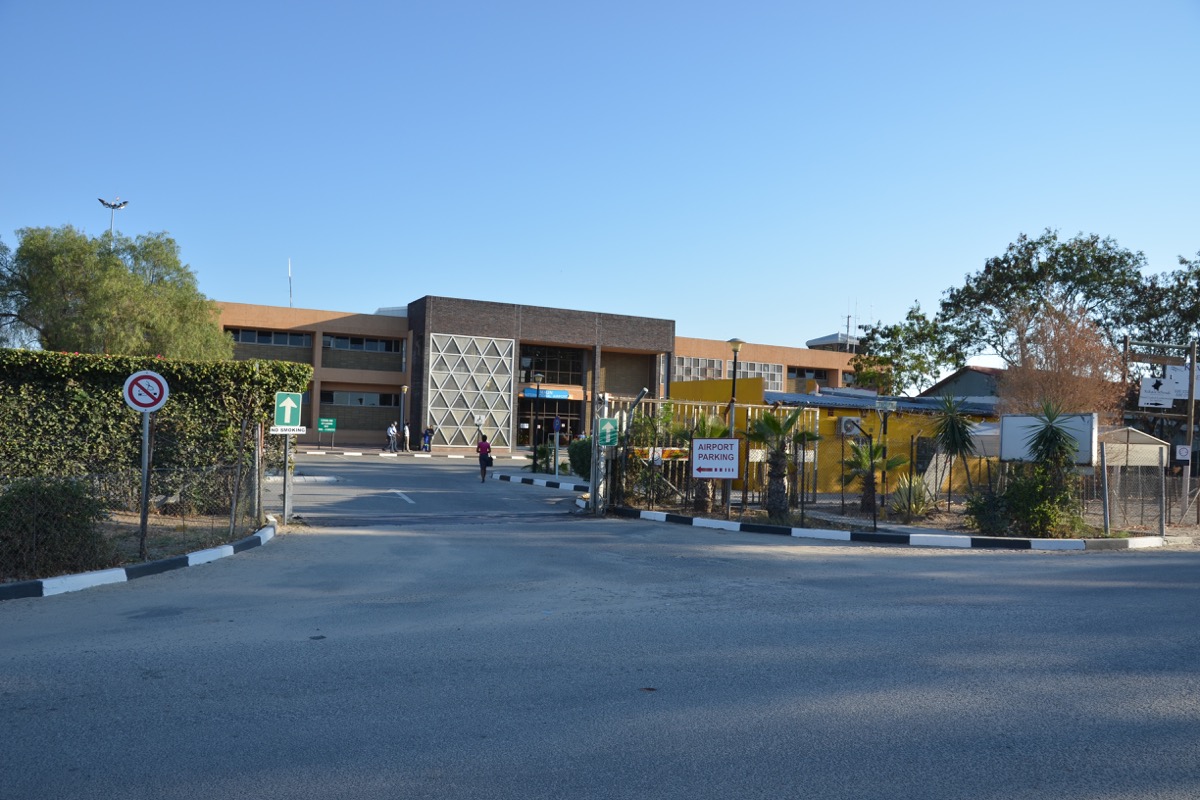 Along the way
Maun Airport marks the Journey's fixed gateway to the delta.
When to go
- Best time
- Every year, June–July
- Why then
- Okavango flood season
- Time zone
- Central Africa Time
Stop by stop
The stops in order. Set your own pace day to day.
- 01
Maun International Airport
- 02
Maun arrival and exit base
- 03
Vumbura Airstrip
- 04
Little Vumbura
Before you book
Book first
- One booking for flights, Maun lodging, camp, bush flights, transfers, activities, insurance and evacuation cover
- A Wilderness Air flight to Vumbura Airstrip (check baggage limits)
- Little Vumbura camp, with its current activities and accessibility
Know before you go
- Follow your guide, pilot, poler and camp staff. Never drive, swim or walk off alone in the delta.
- Any flight, drive, boat or mokoro trip can change with the weather or water levels
- See a travel doctor about malaria, and carry insurance that covers remote areas
Keep in mind
- June–July is the usual high-water season. We can't forecast the 2027 flood.
Sources and methodology
- UNESCO World Heritage Centre
- Botswana Tourism Organisation
- Government of Botswana
- Botswana Tourism Organisation
- Wilderness
- Wilderness
- Wilderness Air
- Wilderness
- Botswana Tourism Organisation
- Government of Botswana
- Botswana Tourism Organisation
- UK Foreign, Commonwealth & Development Office
- US Centers for Disease Control and Prevention