
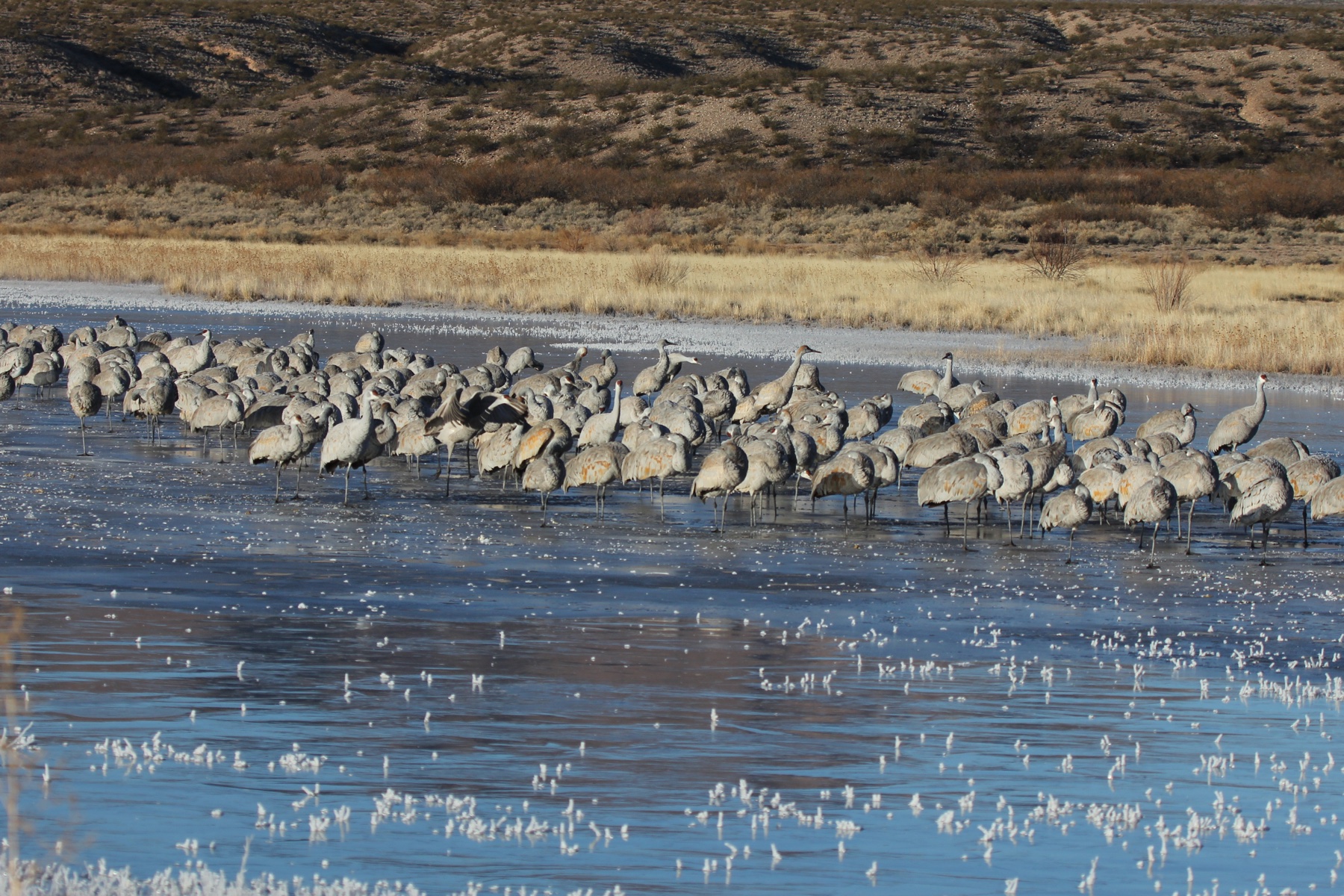
Winter Cranes at Bosque del Apache
A road trip to Socorro and Bosque del Apache for the winter crane season.
- Fly into
- Albuquerque · ABQ
- Shortest trip
- 3 nights
- Ideal stay
- 4-6 nights
- Best time
- Every year, early November–late January
Why go
At Bosque del Apache, managed wetlands, desert edges and the Rio Grande meet in one of New Mexico's best places for winter birds. The driving loop and marked trails are made for slow, patient watching from dawn to dusk. Historic Socorro is an easy small-town base, with food and services close to the refuge.
- Where
- New Mexico, United States
- Language
- English
- Currency
- USD
- Time zone
- Mountain Time
- Best time
- Every year, early November–late January
- Typical conditions
- Dawn at the refuge is cold, and you'll spend long stretches standing still. Dress warmly and bring layers.
Plan for 4-6 nights. That's several dawns and dusks at the refuge and time to see the Rio Grande valley, whatever the cranes decide to do.
Read the Bosque del Apache guide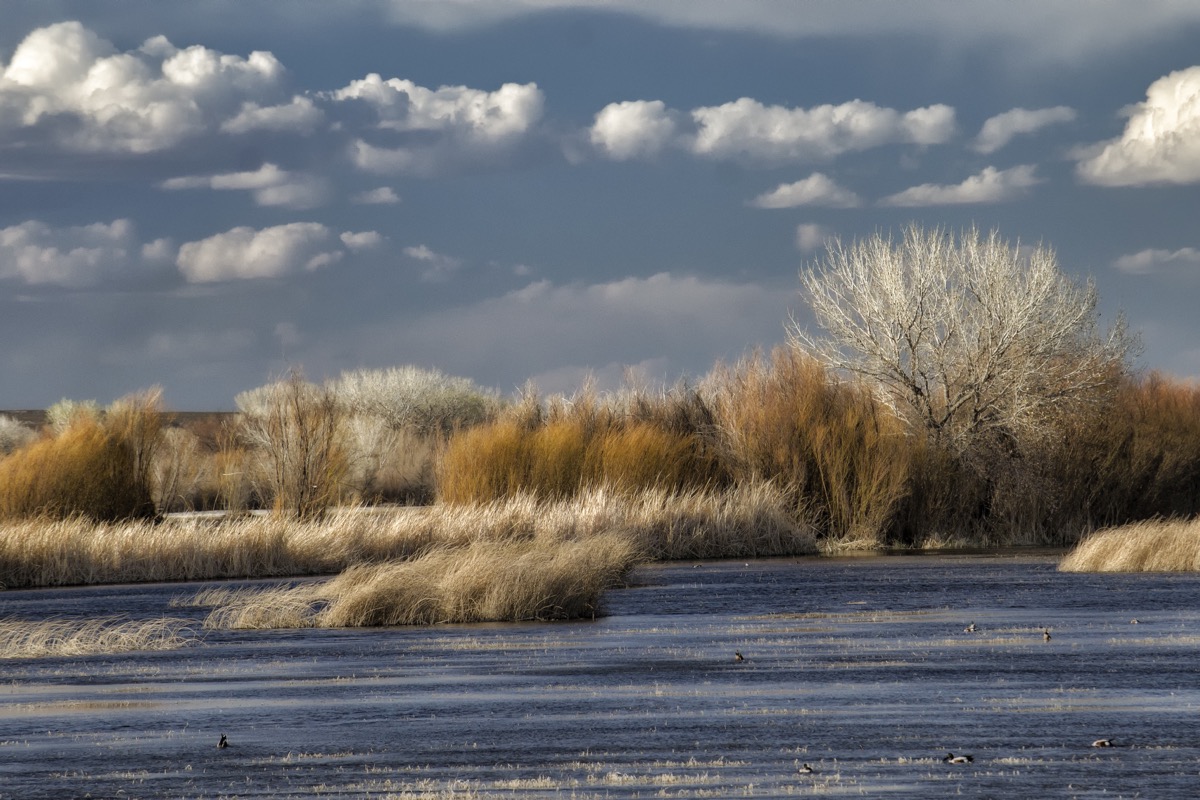 The place
A historical view of Bosque del Apache's wetland and cottonwoods carries the refuge chapter beyond any single crane gathering.
The route
Follow the stops in order.
For orientation only. Use a map app for directions.
- 01Albuquerque
- 02Socorro
- 03San Antonio
- 04Bosque del Apache
Highlights
- 01
Bosque del Apache
Crane-wetland dawn · ~2 hr · Pre-dawn from Socorro · Cold/still · Roosts vary
- Why it fits
- A quiet dawn watch captures the refuge's defining spectacle as cranes and geese animate the Rio Grande wetlands.
- Useful time
- Keep roughly two hours around dawn for a quiet watch without waiting for a fixed count.
- From base
- Drive from Socorro using current opening times and a legal observation area.
- Effort and access
- Cold, darkness and stationary periods matter more than distance; avoid disruptive light.
- Seasonal note
- Winter brings broad crane presence, but location, number and behavior change daily.
- 02
Bosque del Apache
Refuge habitats · ½ day · Socorro drive · Gravel loop · Roads/wildlife vary
- Why it fits
- The loop passes through varied managed habitats, helping travelers understand why wildlife gathers in different parts of the refuge.
- Useful time
- Allow a half day for the 12-mile gravel loop so wildlife stops never require hurried driving.
- From base
- Use a private vehicle from Socorro, enter during current hours and return by the same road.
- Effort and access
- Keep speeds low and use designated pullouts; optional walks are separate.
- Seasonal note
- Road condition, maintenance, water management and wildlife locations can change.
- 03
Bosque del Apache
Wetland ecology · 2–3 hr · Socorro drive · Pick your trail · Cold/notices
- Why it fits
- Wetland interpretation explains the deliberate water management and conservation work behind the refuge's seasonal abundance.
- Useful time
- Keep two to three daylight hours for one refuge trail and habitat interpretation.
- From base
- Return from Socorro and choose the trail after checking current notices.
- Effort and access
- Select a signed trail matching mobility, temperature and surface conditions.
- Seasonal note
- Cold, wind and habitat operations can shorten access, while wildlife remains unguaranteed.
A closer look
 Along the way
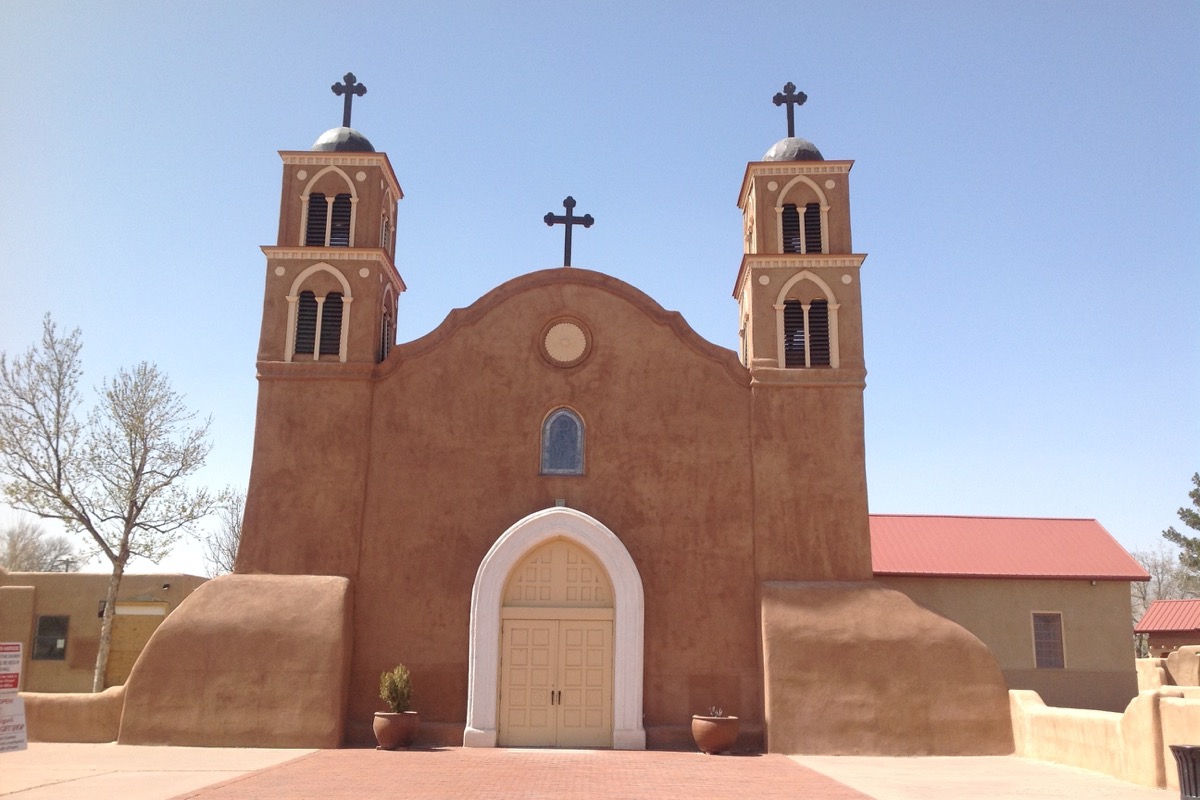
San Miguel Mission gives the Socorro base a distinct historic-place chapter on El Camino Real.
When to go
- Best time
- Every year, early November–late January
- Why then
- Winter cranes
See the moment - Time zone
- Mountain Time
Stop by stop
The stops in order. Set your own pace day to day.
- 01
Albuquerque
- 02
Socorro
- 03
San Antonio
- 04
Bosque del Apache
Before you book
Book first
- A car
- Tour Loop fee or a valid pass
- Check refuge notices
Know before you go
- No drones, feeding, harassing or loud audio
- Drive slowly and stop only in pullouts
- Don't use lights to find animals
Keep in mind
- Cranes move their roosts, and there's no reliable live count.