
Photo information

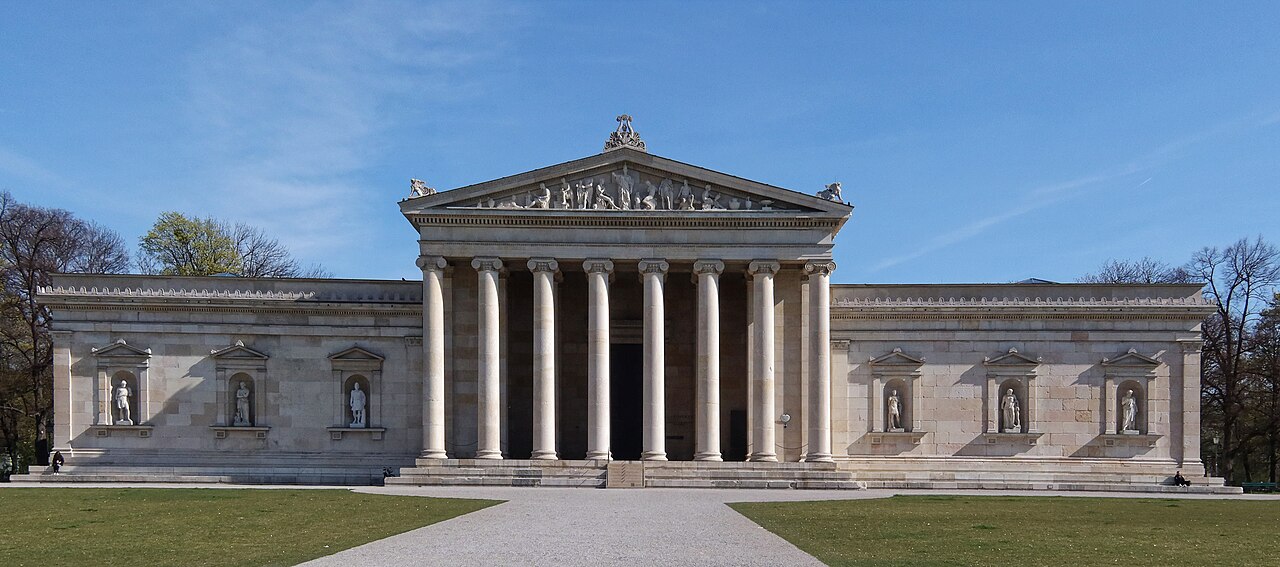
Glyptothek

Photo
Burkhard Mücke
Licence
CC BY-SA 4.0
Original
View source
Changes
Cropped
Trailwind
Landmark

Glyptothek

Munich, Germany
Best timeMar & Sep
Set inMunich, Germany
In season~68°F high
Climate
Data source

Climate

Source

2018–2023 averages, not a forecast. Wet days estimate days with at least 1 mm of rain or snow using a calibrated ERA5 threshold. Contains modified Copernicus Climate Change Service information. Weather data by Open-Meteo.com (AWS Open Data, CC BY 4.0).

ERA5 via Open-Meteo AWS Open Data

30–77°F
CurrencyEUR
LanguageGerman
TimezoneUTC+01:00
On the map
Map showing the location of Glyptothek
Directions (Google Maps) →
Historical monthly weather
Sunny share of daylightSep · 48%
WarmestJul · 77°F
WettestMay
Best windowMar & Sep
J
F
M
A
M
J
J
A
S
O
N
D
Bar height is the typical daytime high; color shows sunny share of daylight. The shaded months are the ideal window to go.
Weather data & source

2018–2023 averages, not a forecast. Wet days estimate days with at least 1 mm of rain or snow using a calibrated ERA5 threshold. Contains modified Copernicus Climate Change Service information. Weather data by Open-Meteo.com (AWS Open Data, CC BY 4.0). Sunny share of daylight is calibrated from daytime cloud cover. ERA5 via Open-Meteo AWS Open Data

The Glyptothek is a museum in Munich, Germany, which was commissioned by the Bavarian King Ludwig I to house his collection of Greek and Roman sculptures. It was designed by Leo von Klenze in the neoclassical style, and built from 1816 to 1830. Today the museum is a part of the Kunstareal.

Best time to visit

Two separate windows work best: Mar & Sep. Pick the one that matches what you came for.

Pairs well with
Frequently asked questions

When is the best time to visit Glyptothek?

The best time to visit Glyptothek is March & September, in Munich, Germany.

Where is Glyptothek?

Glyptothek is in Munich, Germany.

What is Glyptothek known for?

The Glyptothek is a museum in Munich, Germany, which was commissioned by the Bavarian King Ludwig I to house his collection of Greek and Roman sculptures. It was designed by Leo von Klenze in the neoclassical style, and built from 1816 to 1830. Today the museum is a part of the Kunstareal.

Explore Munich →